

Cascade communication: how a decision reaches every level of leadership intact
Steffen Rosenögger, Founder of CapmePublished November 14, 2026
What a communication cascade loses at each management level, three cascade formats compared, and a briefing email for managers, ready to send.
In short
- Reasons and commitments are the first things a cascade loses, so both go into the briefing word for word.
- Senior management records the why once, each manager records the team part, and the organiser watches that part before the team does.
- If a manager does not back the decision, or the topic affects people personally, the conversation happens live.
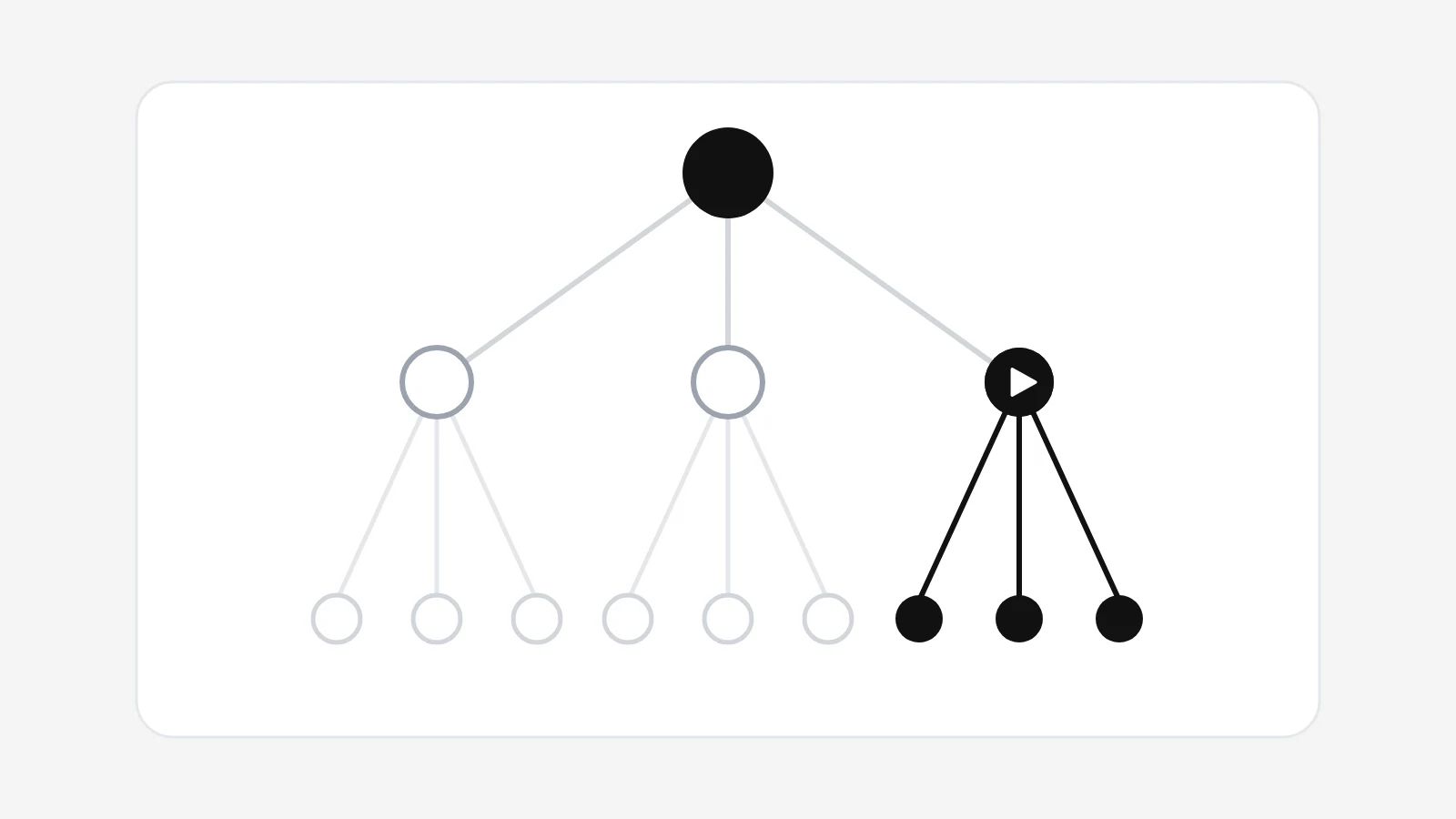
A communication cascade passes a decision by senior management down through each level of managers to every employee. It works when two parts stay separate: the why reaches everyone unchanged, in senior management's own voice, and each manager explains only what the decision means for their team. When every level retells both, the cascade turns into a game of telephone.
A game of telephone: after three levels, the reason and the commitments are gone
A fictional example from a manufacturing company with 600 employees: one decision, four stops, five days.
- Senior management, Monday"From 1 April, a key account team will look after our 20 largest customers. Today these customers have up to four contacts with us. Territories and the commission model stay as they are until the end of the year, and nobody loses their job."
- Sales director, Tuesday at the leadership meeting"From April the major customers go to a central key account team. There's more to come on commission and territories." The reason is gone, and the commitment has become a maybe.
- Team lead, Sales South, Wednesday at the team meeting"From April they're taking the big customers away from us. What that means for commission, I don't know either." Pooling the accounts has turned into taking them away.
- Field sales rep, Friday by the coffee machine"First they take the big customers, then the commission."
Nobody lied. Each level left out what it did not know for certain and stressed what affected it directly. The sentence on territories and commission, which would have answered the field team's biggest worry, wobbled at the first step and was gone by the second.
Managers are expected to explain the change and get three bullet points to do it
In many companies, employees hear about a change first from their direct manager. What the team understands then depends on how well that manager was briefed.
A manager who gets three bullet points on a slide on Tuesday and has to brief the team on Wednesday fills the gaps with guesses. The change communication plan decides beforehand which messages go through the cascade at all.
Who says what? Senior management the why, the manager the team part
Employees want the reasons from the top and the personal impact from their own manager, according to Prosci's best practices in change management: "58% of employees prefer to receive communications about the personal impacts of change directly from their supervisors." And: "Most want to hear about the business reasons for the change from the CEO." (Prosci)
In the classic cascade every manager retells both, and each retelling softens exactly the commitments that have to arrive word for word. The manager's part answers four questions:
- What changes for our team, for whom, and from when?
- What stays as it is?
- What is still open, and when will we know more?
- Where do questions go, and when do we talk about them?
In Capme: one video from senior management, one part per team lead, checked before it goes out
In Capme Meetings, the cascade becomes one meeting per team: topic 1 is the managing director's recorded why, topic 2 the team lead's part. In the fictional example, the change lead organises eight meetings for eight sales teams:
- The change lead creates eight meetings with a recording deadline of Thursday, 12:00. Topic 1, "Why we are pooling our major customers", goes to the managing director (five minutes), topic 2, "What this means for Team South", to the team lead (four minutes). The audience is the team.
- Once the invitations are out, the managing director records once in the browser on Tuesday and picks "Use an existing video" in the other seven meetings.
- As speakers, the team leads see this video before it is published; it is their briefing before they record their own topic. That same Tuesday, they and the sales director get 30 live minutes with senior management, two working days before the teams. The sales director records a part only if something different changes for their division, and then becomes the eleventh speaker.
- On Thursday the organiser watches every topic 2 before the team sees anything. Missing ones get a "Remind everyone"; Capme does not remind speakers on its own. A reinterpretation shows up here in time: if a team lead says "they're taking our customers away", the two of them talk and the team lead records again.
- After publishing, the team gets an email and watches both topics in order. For each meeting and person, the organiser sees "watched", "1/2 watched", "opened" or "not opened" (a topic counts as watched from 75 %).
There is no overview across all eight meetings: watch progress is shown for each meeting separately. Only the person who recorded a video can reuse it (Help: Record your topic).
Capme has no comments or Q&A, so questions go to the next team meeting, where the team lead keeps 20 minutes free. Viewers are free; here the workspace pays for ten speakers: the managing director, eight team leads and the organiser, who has to be a speaker too. Team is enough for one department, with the videos stored in the EU; a larger company that wants them in its own S3 bucket, plus single sign-on, takes Business (pricing).
Set up your next cascade as one meeting per team
Try it for 14 days, no credit card.
Live, recorded or mixed? Mixed fits most decisions; job cuts stay live
Live, recorded and mixed cascades differ in who controls the wording of the reason and the commitments, and in where questions end up:
| Criterion | Live at every level | One video for everyone | Mixed |
|---|---|---|---|
| Wording of reasons and commitments | Changes at every level | Stays the same | Stays the same |
| What it means for the team | Good if the manager has been briefed | Missing | The manager records it |
| Follow-up questions | Asked on the spot | Need a channel of their own | In the team meeting afterwards |
| A manager does not back the decision | Shows in the leadership meeting and can be discussed there | Loses: the dissent stays invisible and comes out in the corridor | Shows in the team part; a conversation has to resolve it |
| Job cuts, site closure | Required | Loses: not by video | Only as a follow-up to the personal conversation |
If there is no team part because everyone should hear the same thing, it is an all-hands.
A manager who disagrees gets 30 live minutes first
Objections belong on the table before a manager stands in front of the team. So brief all managers two working days before their teams, in a live session with senior management where any question is allowed. In a restructuring the gap shrinks to a few hours, because a night in between breeds rumours (communicating a restructuring).
Also agree on what may be said honestly. A team can live with "I would have decided differently, and this is how we will implement it"; ban that sentence and it turns up by the coffee machine instead. Nobody waters down the commitments, though, not even with a shrug.
One question, asked without the manager, shows whether it landed
A view rate only shows who opened something. A week after the team meeting, ask two or three teams, without their manager present: "What is changing, and why?" If the reason or the commitment is missing from the answers, you know where to follow up.
Watch progress shows you who has not watched yet; how to follow up without nagging is covered in Will anyone watch it?. In Germany, per-person watch progress is subject to co-determination by the works council (Betriebsrat) under § 87(1) no. 6 BetrVG; more in Introducing a video tool in Germany. This is not legal advice.
Template: the briefing email to managers
Replace the brackets and send the email on the day of the decision:
Frequently asked questions
- How many levels can a communication cascade take?
- There is no reliable figure. From three levels on, it pays to send the why from senior management straight to everyone and let only the team part run through the levels.
- What if the team has already heard the news through the grapevine?
- Then open the team meeting by saying what is true and what is not, with the core sentence and the commitments word for word. Plan the next cascade so that every team knows within three working days of the decision.